
Glossary
Carpet Glossary
Pile, nap, seam, tack strip, power stretcher and more: the words carpet pros use, explained in plain English. Search or scroll.
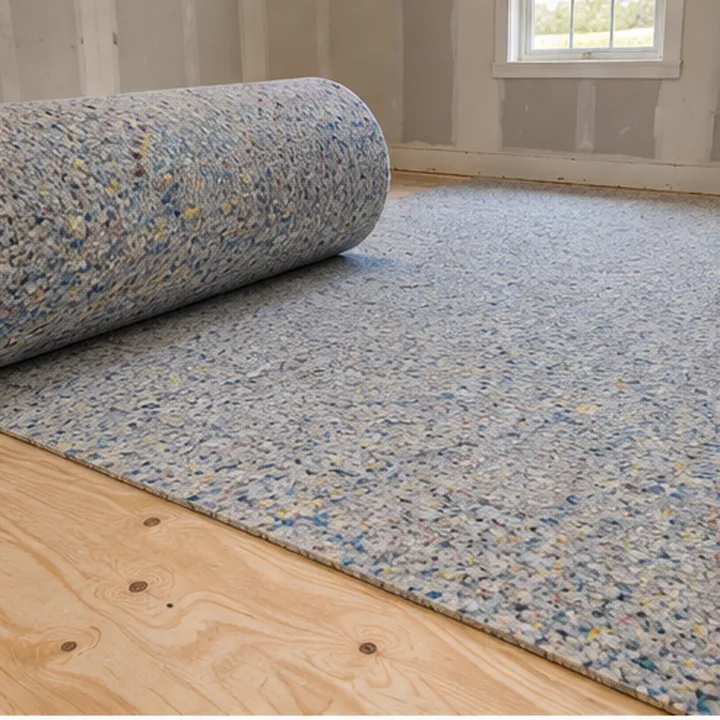
- Backing
- The woven layer on the underside of carpet that holds the fibers in place.
- Berber
- A loop-pile carpet, usually flecked, known for toughness and a tidy look.
- Binding
- A finished, stitched or taped edge that turns a piece of carpet into a rug.
- Broadloom
- Carpet made in wide rolls, usually twelve or fifteen feet, for wall-to-wall use.
- Carpet tile
- A square of carpet laid in a grid, easy to replace one piece at a time.
- Cushion
- Another word for carpet padding, the layer under the carpet that adds comfort and support.
- Cut pile
- Carpet whose loops are cut so the fibers stand up as soft tufts.
- Density
- How tightly the fibers are packed, which affects how well carpet resists crushing.
- Extraction
- Cleaning that sprays solution into carpet and pulls it back out with strong suction.
- Face weight
- The weight of the fiber in a square yard of carpet, one clue to its quality.
- Frieze
- A cut-pile carpet with tightly twisted, curly fibers that hides footprints.
- Knee kicker
- A tool that pushes carpet toward the wall to take up slack before power stretching.
- Loop pile
- Carpet whose loops are left uncut, giving a firm, durable surface.
- Nap
- The direction the pile leans, which can change how color looks from different sides.
- Nosing
- The rounded front edge of a stair tread, which carpet wraps over.
- Nylon
- A common carpet fiber known for resilience and good wear.
- Olefin
- A fiber, also called polypropylene, often used in loop carpet and tile.
- Padding
- The layer under carpet that adds comfort, sound control and life.
- Pile
- The upright fibers on the surface of carpet.
- Pile height
- How tall the fibers stand, from low and tight to deep and plush.
- Plush
- A smooth, soft cut-pile style, sometimes called saxony.
- Polyester
- A soft carpet fiber with rich color, often used in cut-pile styles.
- Power stretcher
- A tool that pulls carpet tight across a room so it lies flat and stays that way.
- Pre-treatment
- Spraying traffic lanes and spots before cleaning so the solution can loosen soil.
- Reducer
- A low transition strip where carpet meets a thinner floor.
- Seam
- The line where two pieces of carpet are joined.
- Seaming tape
- Heat-activated tape that bonds the edges of two carpet pieces together.
- Subfloor
- The structural floor under the carpet, often plywood or concrete.
- Tack strip
- A thin strip with small pins, nailed around the room's edge to hold carpet in place.
- Texture
- The finished surface look of carpet, from smooth to twisted to looped.
- Transition strip
- A strip that finishes the edge where carpet meets another floor.
- Twist
- How many times the fibers are twisted, which affects texture and durability.
- Wool
- A natural carpet fiber valued for its feel, look and resilience.
No term matches that search. Try a shorter word.
Still have a question?
Describe your rooms and we will explain it in plain English.